
As one of the largest undergraduate-only anthropology departments in the United States, we embrace a comparative and holistic approach to studying the human experience. Through the anthropological perspective, we delve into the origins and meaning of physical and cultural diversity in the world, spanning across the past, present, and future.
Our program in anthropology offers a unique opportunity to comprehend global affairs and address societal challenges within the broader context of the human experience. Cultural anthropologists within our department explore the practices, beliefs, and identities of individuals, both within and beyond the United States. Topics such as power, inequality, and social praxis are central to our investigations.
Archaeologists in our program specialize in unraveling the material culture of past societies, reconstructing their traditions and practices. By understanding the past, we gain valuable insights that aid our comprehension of the present. Biological anthropologists, on the other hand, focus on primate evolution, behavioral ecology, human biological variation, biocultural adaptations, bioarchaeology, and human paleontology. Together, we strive to unravel the diverse range of human societies, both past and present.
Why study anthropology? This question lies at the heart of our program. By choosing to study anthropology, you embark on a journey of exploration and understanding, equipping yourself with invaluable skills and knowledge. Through engaging coursework, immersive field experiences, and collaborative research opportunities, you'll develop a profound appreciation for the intricacies of human societies, past and present. Join us as we unravel the tapestry of human diversity and contribute to finding meaningful solutions to real-world problems.

News & Events

The story of the first human tool: the humble container [faculty featured]
May 12, 2026
In the prehistoric opening of 2001: A Space Odyssey, the first tool is a club: a long limb bone that proves handy for killing prey animals, murde...

Katie Rodriguez ’25 recognized with 2025–26 Cratis D. Williams School of Graduate Studies Outstanding Thesis Award
Apr 14, 2026
BOONE, N.C. — Appalachian State University's Cratis D. Williams School of Graduate Studies has announced the recipients of their 2025–26...

App State students conduct Spring Break dig in historic Junaluska neighborhood
Mar 19, 2026
BOONE, N.C. — Over Spring Break, 12 Appalachian State University students joined Dr. Cameron Gokee, associate professor in the Department ...

Preserving the past in 2025: Archaeology discoveries, cemetery restoration guide historic year in Ashe [faculty featured]
Jan 8, 2026
ASHE COUNTY — Progress isn’t always about moving forward; it’s also about preserving the past....
Archaeologists uncover a new purpose behind one of North America’s greatest mysteries [faculty featured]
Nov 24, 2025
New evidence suggests Poverty Point’s monumental mounds were created not by a ruling elite, but by egalitarian groups drawn together by shared ritua...

Anna Brown receives staff shout out
Nov 3, 2025
BOONE, N.C. — Awarded by the Appalachian State University Staff Senate, Staff Shout Outs recognize staff members for their positive contributio...
Alumni spotlights
-

Lindsay Wetmore-Arkader
"Upon completing my undergraduate degree in Anthropology at Appalachian I worked as clinical support for Planned Parenthood of Greater NC before taking my first academic position at Wake Forest University School of Medicine in rural health."
Faculty spotlights
-

Dr. Thomas R. Whyte, Anthropological Archaeologist
Dr. Tom Whyte’s research includes southern Appalachian prehistoric archaeology, zooarchaeology, and experimental archaeology. His recent research includes studies of animal remains from archaeological sites throughout the Southeast.
Student spotlights
-
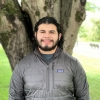
Anthropology major, Edgar Villeda, awarded Rachel Carson Council Fellowship
Edgar Villeda, a senior majoring in Anthropology (BS) - biological anthropology from Selma, has been awarded a fellowship with the Rachel Carson Council (RCC). With this fellowship, Villeda hopes to shed light on racial disparities and injustices to the Latinx community that have taken place in Eastern North Carolina with particular emphasis on Johnston County, his home county.